
 Investing in an Odoo ERP system is a major milestone for any business looking to scale. However, many companies—particularly when navigating Odoo implementation in Pakistan—spend significant capital only to end up with operational delays, frustrated teams, and financial chaos.
The reality is that Odoo itself is rarely the problem; the issue lies in poor implementation strategies. At OdoCore, we believe in doing it right the first time. Below are the fatal setup mistakes that can ruin your company and the steps you must take to avoid them.
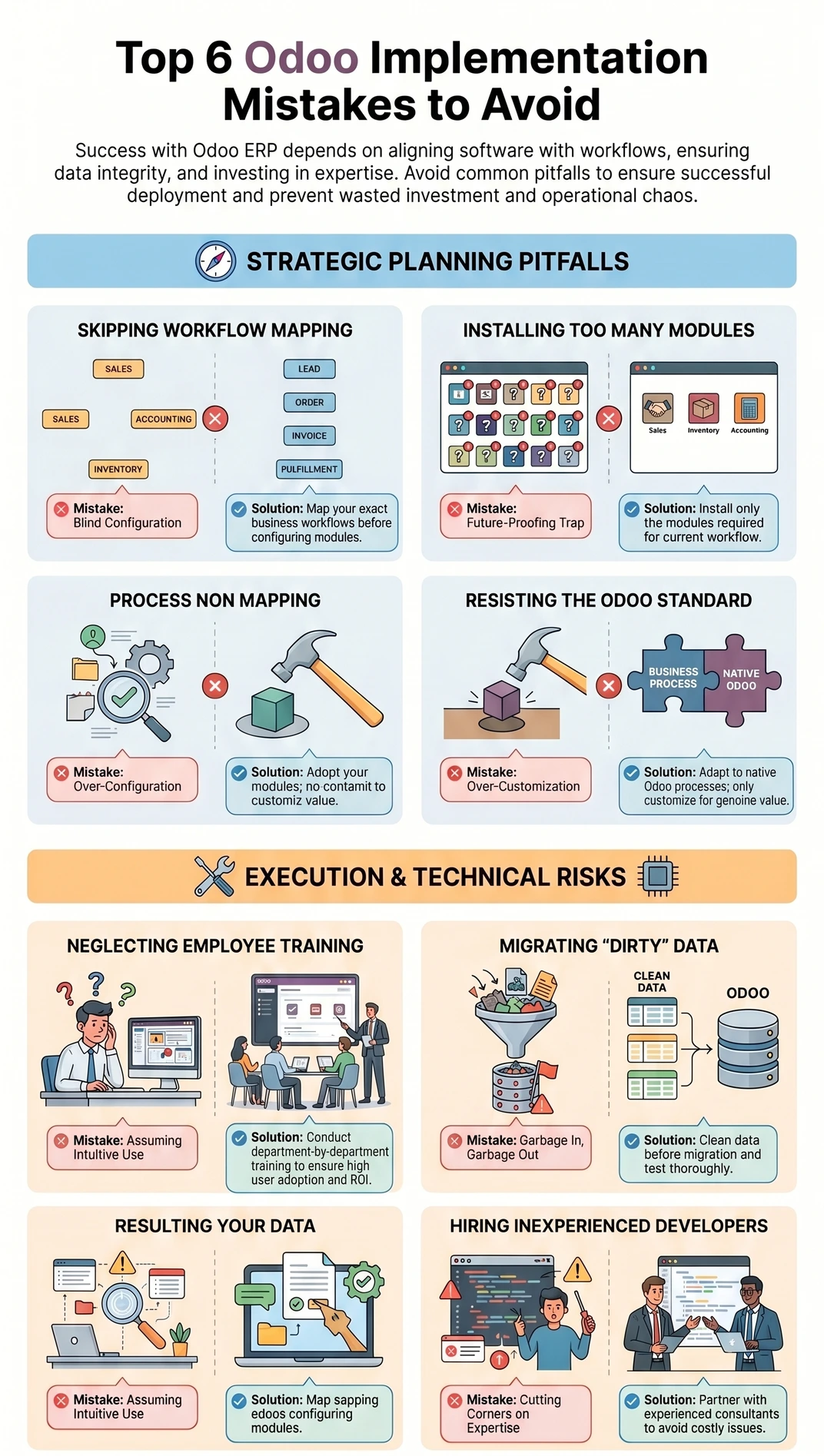
1. Jumping in Without a Defined Workflow
Many businesses treat Odoo as a "magic fix" and dive into the software without mapping out their actual business processes. Before touching the software, you must analyze the specific operations of your sales, purchase, accounting, inventory, and HR departments. Without understanding your workflow, the system cannot be configured to support your growth.
2. The Module Overload Trap
A common mistake is installing every available module under the assumption they will be useful later. This creates unnecessary complexity and clutter. To maintain a seamless operation, you should only install modules that align with your current, understood workflow.
3. Neglecting Employee Training
You can have the most sophisticated ERP system in the world, but if your team doesn't know how to use it, the investment is wasted. Low adoption rates are a leading cause of implementation failure. At odocore, we recommend training your employees department by department to ensure they understand not just how to use the tool, but why it is vital for the business.
4. Migrating "Dirty" Data
Data is the lifeblood of your ERP. Migrating duplicated customers, missing invoices, or incorrect inventory counts can destroy your system’s integrity from day one. To fix this, you must rigorously clean your data before migration and test everything in a staging environment before going live.
5. Prioritizing Low Cost Over Experience
While it is tempting to save money by hiring inexperienced developers, this often leads to higher costs down the road. Bad customizations result in bugs, endless downtime, and high maintenance fees. When considering Odoo implementation in Pakistan, it is crucial to choose an experienced consultant who understands both the technology and the nuances of business logic.
6. Resisting Change
Many businesses try to force Odoo to mirror their old, outdated processes exactly. This defeats the entire purpose of upgrading your technology. Instead, you should adopt standard Odoo processes wherever possible and only invest in customizations that add genuine value to your business.
Final Thoughts
A successful Odoo setup can automate your business, provide better visibility, and drive growth. By avoiding these six traps, you ensure that your ERP becomes an asset rather than a nightmare.
Are you ready to transform your business with a professional Odoo implementation? Contact OdoCore today to get started on the right path.