
 If you are reading this on odocore.com, you likely already know how powerful Odoo can be for streamlining your business. However, we often hear horror stories about implementations gone wrong. Business owners end up thousands of dollars deep, six months behind schedule, and wondering if the software itself is the problem.
Usually, it isn't the software. The most expensive mistake you can make with Odoo isn't picking the wrong edition, paying for botched migrations, or investing in bad custom development, it is picking the wrong implementation partner.
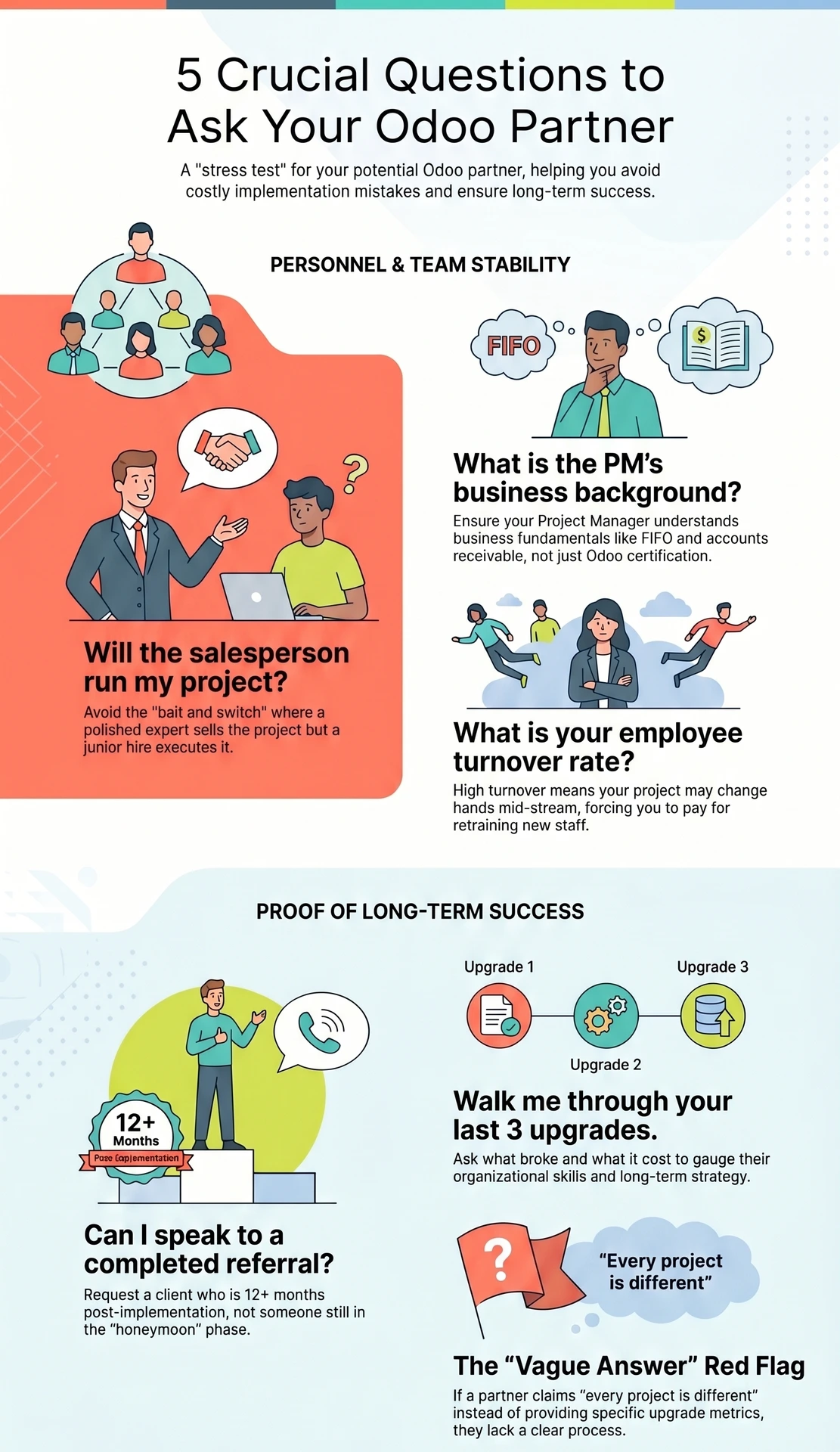
To protect your time and budget, you need to ask diagnostic questions that expose bad partners before you sign a contract. Here are five crucial questions to ask your prospective Odoo partner.
1. "Will the person I'm talking to right now be the person running my project?"
Many implementation partners are notorious for the "bait and switch". They put their most experienced, polished professional on the sales calls to win your trust. You sign the contract thinking they perfectly understand your business, only to be handed off to a new hire who has only been learning Odoo for three weeks—all on your dime. Ask directly who will lead your project and request to meet them before making a deal.
2. "What is your project manager's business background?"
Implementing Odoo correctly is not just a software project; it is a business project. If your partner views you as a small client, they might assign a project manager who lacks real-world business experience. A certified expert is great, but your project manager should intuitively understand business fundamentals. They need to know what an aged receivable report is and what FIFO means without needing you to spend hours explaining basic concepts.
3. "Can I talk to a client who completed their implementation?"
References are standard, but the timing of the reference is everything. Anyone can produce a happy client in month two, during the "honeymoon phase" before invoices pile up and promised features get postponed. Instead, ask to speak with a client who is 12 months post-implementation. You want a referral from a business that has survived the go-live phase, hit friction points, and ideally completed an upgrade. If a partner cannot produce a post-implementation referral, it's a massive red flag.
4. "Walk me through your last three upgrades: What broke, what did it cost, and how long did it take?"
Upgrades will expose a lot about a partner's organization, long-term strategies, and whether they are trying to force you into vendor lock-in. A high-quality Odoo partner will have specific stories, own up to their past mistakes, and share the lessons they've learned to ensure clean upgrades. If they give you a vague answer like "every project is different," it likely means they aren't organized or looking out for your long-term success.
5. "How long do your employees stick around?"
The ecosystem can be stressful, and many partners burn through staff quickly. Junior consultants often get trained, get billed out at senior rates, and quit within a month or two. High turnover means your project will get passed around midstream, and you'll be forced to pay to repeatedly teach new staff about your business. Ask about their retention rate directly. For a pro tip: look up the partner's company profile on Glassdoor to see how they actually treat and retain their employees.
Final Thoughts
Choosing the right partner is the foundation of a successful ERP launch. By asking about bait-and-switch tactics, business acumen, finished referrals, upgrade plans, and employee turnover, you will separate the experts from the amateurs.
If you are looking for trusted resources, expert coaching, or tailored DIY implementation plans for Odoo, be sure to explore our resources here at odocore.com to ensure your project's success!